Menu
 1.866.668.5111
  6:30 am - 6:00 pm
 Give a Happy High Five!

July 6, 2026
Choosing Educational Books for Your Child: Examining The Very Hungry Caterpillar
By Eden Stafstrom, MA PhD ABD, Spanish Immersion Curriculum & Program Manager
When parents ask me how to support their child’s language development, one of my first recommendations is simple: read together every day.
Research consistently shows that shared reading supports language growth, vocabulary development, early literacy skills, and even social-emotional development. But not all educational materials are equally effective. The best books for young children strike a careful balance between introducing new ideas and keeping learning enjoyable.
Two important concepts from language and literacy research can help us understand why some books are especially powerful for young learners: Scarborough’s Reading Rope and Krashen’s Input Hypothesis (often called “i+1”).
Building the Foundation for Reading
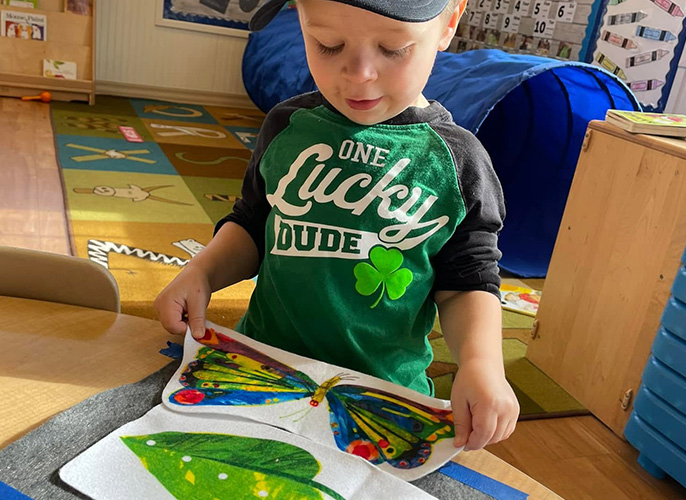 Scarborough’s Reading Rope describes reading as a collection of many smaller skills that gradually become woven together. Before children can become successful readers, they need opportunities to develop foundational abilities such as vocabulary, background knowledge, sequencing, language structures, and verbal reasoning.
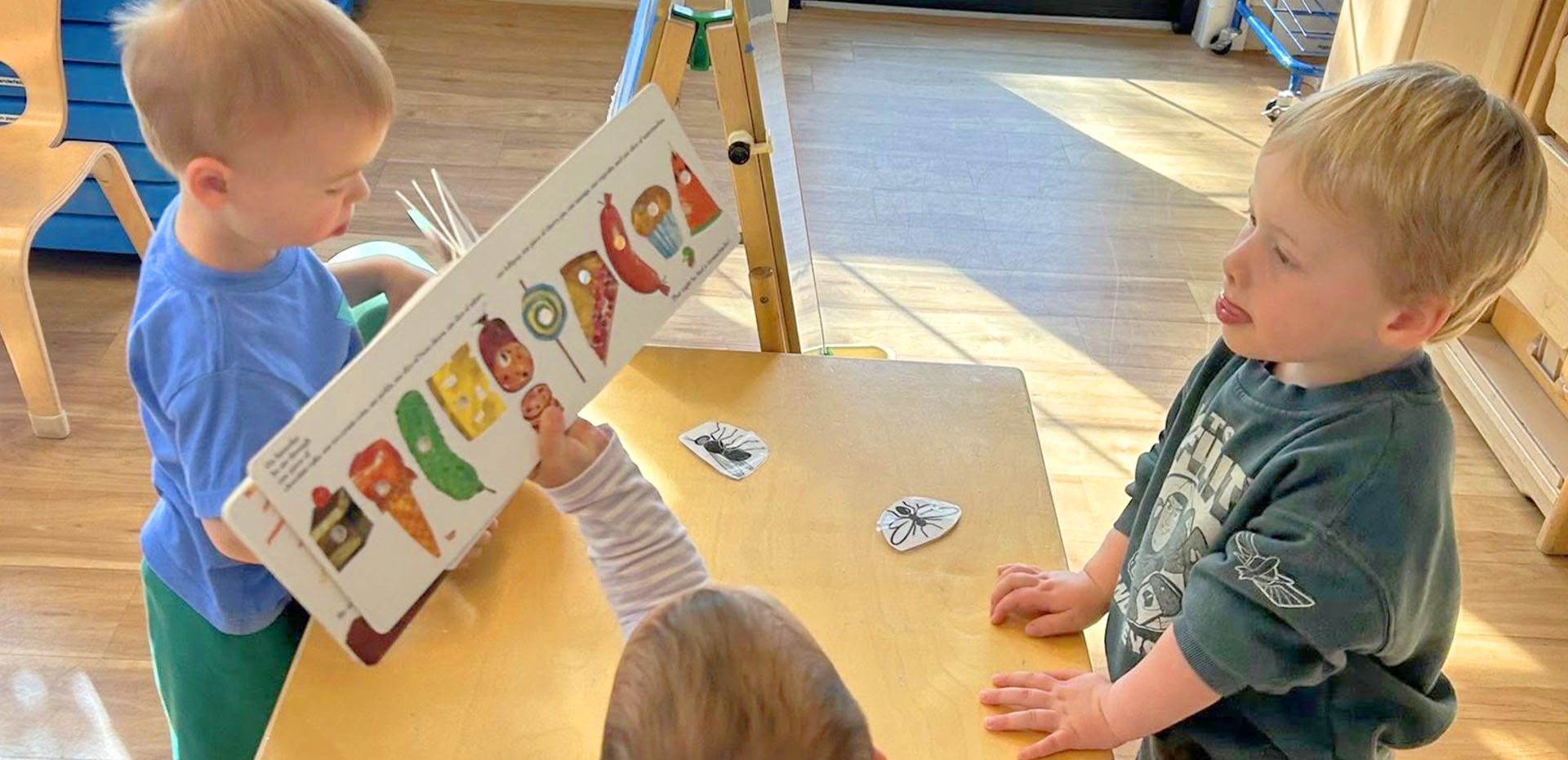
One of the most beloved examples of a book that supports these early literacy foundations is Eric Carle’s The Very Hungry Caterpillar.
At first glance, it may seem like a simple story about a caterpillar eating its way through various foods. But beneath its colorful illustrations lies an impressive amount of learning.
Children are exposed to:
- The days of the week
- Counting and number concepts
- Food vocabulary
- Sequencing and story structure
- Cause-and-effect relationships
- The life cycle of a butterfly
- Healthy eating concepts
- Scientific observation and change over time
That’s an incredible amount of information packed into a short picture book.
What makes it so effective is that these concepts are not presented as isolated lessons or flashcards. Children encounter them naturally through an engaging story. The information feels meaningful because it is connected to a narrative they enjoy.
As children follow the caterpillar’s journey, they are quietly developing many of the micro-skills that eventually support reading comprehension and academic learning.
Learning Just One Step Beyond What They Already Know
The book is also a wonderful example of Krashen’s concept of i+1.
According to Krashen, we learn language most effectively when we are exposed to input that is just slightly beyond our current level of understanding. The material should contain something new, but not so much that it becomes overwhelming.
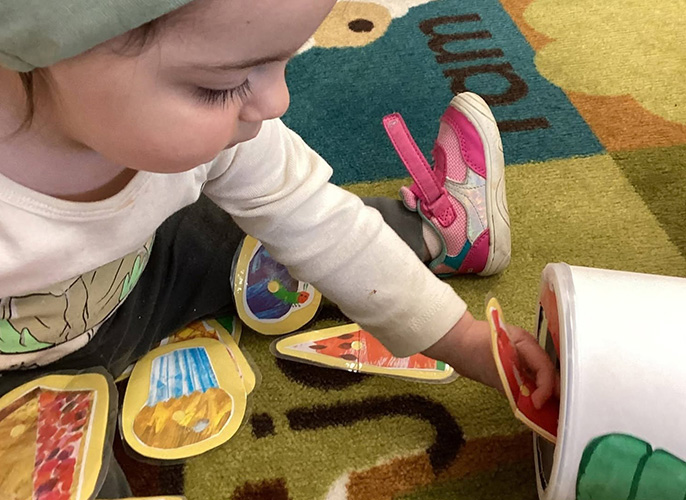
This is exactly what happens throughout The Very Hungry Caterpillar.
Young children may already recognize familiar foods such as apples, pears, and strawberries. They may understand basic concepts like eating, growing, or counting. The book then gently introduces new vocabulary and ideas alongside these familiar concepts. Children are not expected to memorize a myriad of abstract definitions. Instead, they use clues from the illustrations, repetition, and story sequence to construct meaning.
Although only one word—cocoon—is explicitly explained in the text, children often finish the story with an understanding of many other words and concepts. For example, after reading the book they know that caterpillars are butterfly larvae, not just “bugs” or “worms.” Context makes this latent learning possible.
This is very similar to how children learn during play. When a child encounters a new word while playing with blocks, digging in the dirt, or pretending to cook, they use surrounding clues to figure out what that word means. Books can provide the same type of rich, contextualized learning experience.
Don’t Underestimate the Importance of Fun
Sometimes parents feel pressure to choose books that are highly educational or instructional. But one of the most important features of any children’s book is often overlooked:
Is it enjoyable?
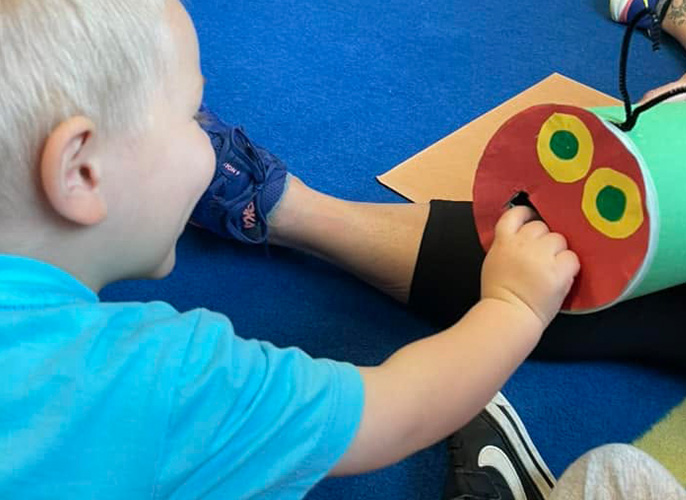 If you and your child genuinely enjoy reading together, you are more likely to do it frequently. More reading means more language exposure, more opportunities for conversation, and more chances to build literacy skills.
The best educational materials do not overwhelm children with facts or drill them with flashcards. Instead, they invite children into meaningful experiences that happen to contain valuable learning opportunities.
The Very Hungry Caterpillar has remained a classic for decades because it achieves this balance beautifully. It introduces a remarkable amount of new information while remaining playful, engaging, and accessible to young learners.
Choosing Books for Developing Language Learners
When selecting books for young children, look for materials that:
- Introduce new concepts gradually.
- Connect new words to meaningful contexts.
- Build background knowledge through stories.
- Support foundational literacy skills such as sequencing and vocabulary.
- Include engaging illustrations that help children make sense of new ideas.
- Are enjoyable enough that children ask to hear them again and again.
Some more books for young children that introduce new concepts in fun ways include:
- The Snowy Day
- We’re Going on a Bear Hunt
- Chicka Chicka Boom Boom
- If You Give a Mouse a Cookie
- And so many more- let your kiddo help you pick! If they are interested in a book, they’ll learn more from it!
The goal is not to maximize the amount of information a child receives in a single sitting. The goal is to provide experiences that spark curiosity, build understanding, and make children excited to learn more.
When books accomplish that, language growth often happens organically.