Menu
 1.866.668.5111
 6:30 am - 6:00 pm

 Give a Happy High Five!

November 10, 2026
Will My Child Lose Their Second Language When They Start School?
Eden Stafstrom, MA PhD ABD, Spanish Immersion Curriculum & Program Manager
I am the primary Spanish speaker in my children’s daily lives. That means maintaining their exposure to Spanish often depends on me: the books I read, the songs I sing, the conversations I initiate, and the experiences I create. Knowing how important consistent exposure is can make that responsibility feel enormous.
Many parents raising bilingual children carry a similar weight. They may worry that placing their child in an English-dominant school or child care setting will undo the language development they have worked so hard to support. Some families pay for expensive bilingual nannies, rearrange their work schedules, or make significant financial sacrifices to preserve their child’s exposure to a home language.
In an economy that increasingly demands two incomes, however, families are often faced with difficult choices. If parents cannot remain home with their children, how can they continue supporting bilingual development? And as children grow, how can families balance their language goals with all the other experiences children need?
These questions became especially real for me when my oldest son turned four. I knew it was time to think beyond language alone. I wanted my children to be bilingual, but I also wanted them to explore science, engineering, art, music, and early literacy. I wanted them to make friends and develop their social skills. I wanted them to develop the full range of skills that would prepare them for school.
Unfortunately, it was difficult to find opportunities that supported broader education in Spanish. For example, our local library offered wonderful storytimes and early-literacy events, but none in Spanish. I even searched the library systems in neighboring counties. I was willing to drive! But I still didn’t find any options.
I began to feel stretched thin. As the only person regularly speaking Spanish with my children, how could I provide rich language exposure while also creating meaningful experiences in science, art, literacy, culture, and everything else I wanted them to explore? How could I meet this ideal of bilingual education all by myself?
The pressure was immense. I needed help. But if I enrolled my children in a primarily English speaking child care center, would they lose the Spanish I had worked so hard to teach them?
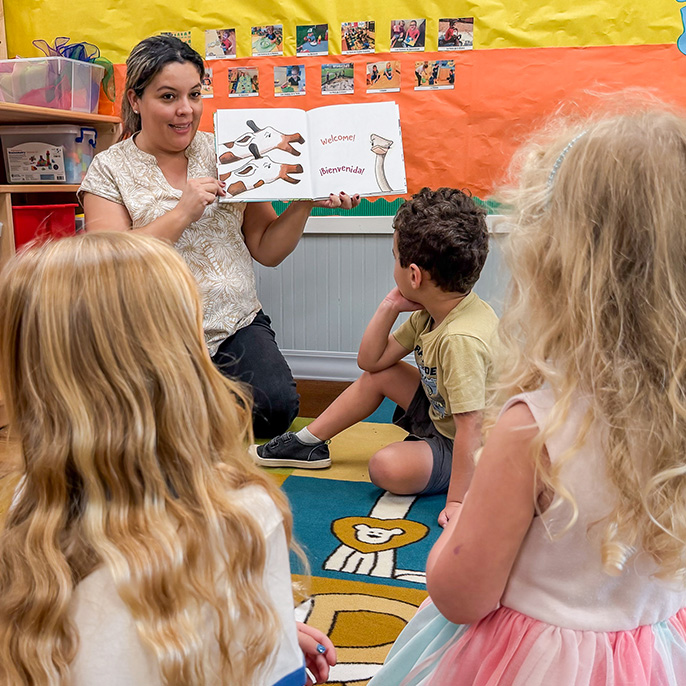 Will children lose their second language when they start school?
Choosing the Right Child Care Program Can Make a Difference
For bilingual families, choosing a child care program is not simply a question of convenience. It can be a deeply emotional decision. After putting so much of your time, effort, and heart into passing on your language, entrusting your child to an English-dominant environment can feel frightening. You may wonder whether English will begin to replace the language you have worked so carefully to nurture.
The right child care program can help support that transition. However, families should look carefully at what programs mean when they describe themselves as “bilingual” or say that they offer exposure to another language. These terms can refer to very different experiences.
A program may play an occasional Spanish song, passively display bilingual labels, or practice colors and numbers a few times a month. While these activities can be enjoyable, they do not necessarily represent a meaningful language program. Parents deserve to know what is actually being offered.
When considering a program, families should ask:
- How often will my child hear Spanish?
- Does the program have a written curriculum with clear goals?
- Who leads the Spanish experiences, and what is that person’s level of proficiency?
- Is Spanish used in complete, natural sentences or does the curriculum focus on isolated “words of the week”?
- Are activities adapted for infants, toddlers, preschoolers, and Pre-K children?
- Does the program incorporate authentic books, music, stories, and cultural materials?
- Is Spanish connected to broader learning in literacy, STEM, art, movement, and social development? Or is it totally isolated from other subjects?
- How does the program support children who already hear or speak Spanish at home?
- How can families support what their children are exploring at school? Will families have access to regular updates?
These questions can help parents distinguish between an intentional approach to early language development and lesser programs that might be “just for show.”
They also reflect the questions I carried with me as a linguist, educator, and bilingual parent. I knew that simply placing Spanish words around a classroom would not relieve the pressure I felt. I wanted my children to hear Spanish used naturally by another person. I wanted them to explore meaningful ideas through the language and to discover that Spanish belonged not only in conversations with me, but also in books, music, science, art, play, and friendships.
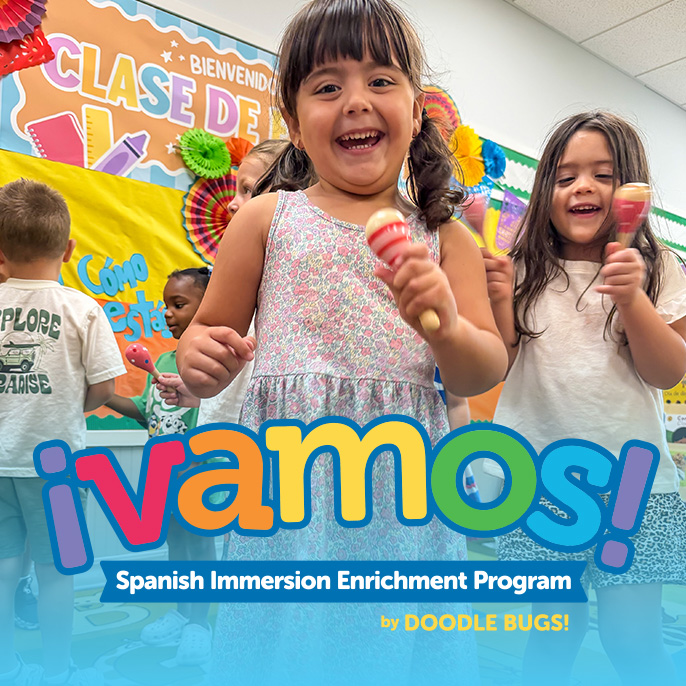 Introducing ¡Vamos! at Doodle Bugs! Oviedo
That is why the new ¡Vamos! pilot at Doodle Bugs! Oviedo is so meaningful to me.
Doodle Bugs! Children’s Learning Academy provides early childhood education through Bravo!, its comprehensive, play-based curriculum. Bravo! supports children’s development across early literacy, STEAM, art, music, movement, social-emotional learning, and school readiness.
¡Vamos! is a new Spanish-language curriculum designed to complement those experiences. The program provides infants, toddlers, preschoolers, and Pre-K children with meaningful daily exposure to Spanish. During a dedicated daily Spanish experience, children encounter complete, natural language in games, songs and stories.
¡Vamos! is not simply a bilingual label added to occasional classroom activities. It is an intentional curriculum with clear, developmentally appropriate goals and experiences designed specifically for each stage of early childhood.
Because ¡Vamos! aligns with Bravo!, Spanish is not isolated from the rest of children’s learning. Children can explore related ideas in science, engineering, art, literacy, music, movement, culture, and imaginative play across both programs. A concept introduced through Bravo! may be revisited through a Spanish story, song, game, or hands-on activity in ¡Vamos!, allowing children to deepen their learning while engaging with another language.
Together, Bravo! and ¡Vamos! support children’s development in both English and Spanish. Children encountering Spanish for the first time receive a joyful, welcoming introduction to the language. Children who already hear or use Spanish at home receive something just as important: another person, another place, and another community in which their language is recognized, shared, and celebrated.
What I Have Seen in My Own Children
When my children began participating in ¡Vamos!, I saw benefits that extended far beyond the new Spanish words they learned.
They began using Spanish regularly with someone other than me. They saw other children listening, singing, moving, and playing in Spanish. They began to recognize that their existing knowledge was valuable and that Spanish was something they could share with classmates and teachers.
Most importantly, I saw renewed enthusiasm. Spanish no longer felt like something that depended entirely on their mother. It became part of their school day, their friendships, and their identity as learners. They could experience the language through topics and activities they already loved while continuing to grow in English through the rest of their day.
That change was meaningful for me, too. The responsibility for sustaining Spanish no longer felt as though it rested entirely on my shoulders. I was still an essential part of my children’s bilingual development, but I was no longer their entire Spanish-speaking community. Their teacher and classmates had become part of that community with us.
No child care program can replace the language, traditions, and relationships children experience within their families. But at the same time, no parent should feel alone in their child’s education. At Doodle Bugs!, we believe families should be able to trust that a program will deliver what it promises. Through the ¡Vamos! pilot, we are exploring what it can look like for a high-quality early childhood program to stand beside bilingual families—supporting children’s Spanish and English development without asking them to choose between maintaining a treasured language and receiving a rich, well-rounded education.
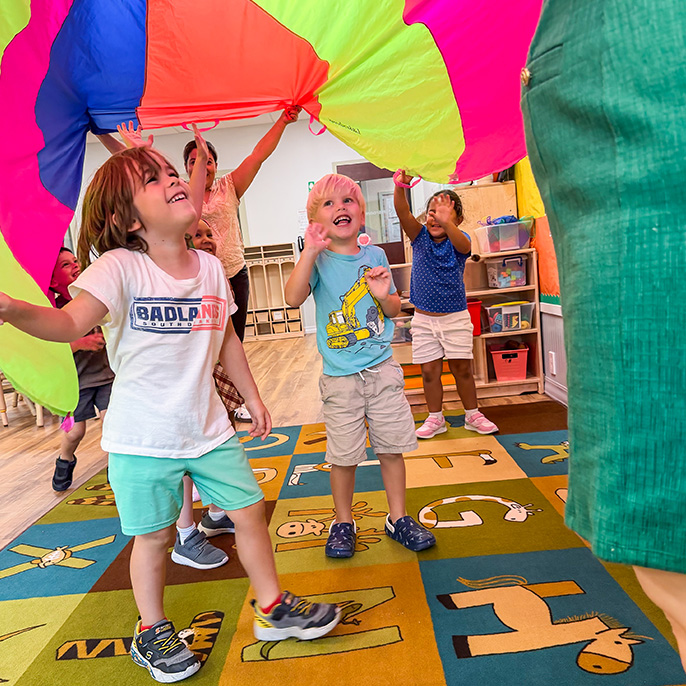 Your Child’s Language Journey Will Continue to Evolve
If you feel nervous about placing your bilingual child in child care, that fear is understandable. You have put part of yourself into passing on your language. Entrusting your child to other caregivers may feel as though you are also entrusting them with something precious.
Your child’s relationship with each language will change throughout life. There may be periods when English becomes more dominant, times when your child responds in English even though you speak Spanish, or seasons when understanding develops more quickly than speaking. There will also be seasons in which your child’s enthusiasm for the language is high and their use of the language blossoms. These ups and downs do not mean that you have failed, that your child has rejected your language, or that your earlier efforts were wasted. Bilingual development is not a perfectly balanced, linear process. It grows and shifts alongside a child’s relationships, needs, and environment.
At Doodle Bugs!, we cannot replace the language, traditions, and relationships children experience within their families—and we would never want to. What we can do is stand beside families and help carry the responsibility that too often falls on parents alone. Through Bravo! and ¡Vamos! curriculums, we can support children’s communication and learning in both English and Spanish while creating a community in which both languages are treated as meaningful and valuable.
Starting child care does not have to mean leaving Spanish behind. With a thoughtful program, honest partnership, and a community that values both languages, it can become another meaningful chapter in your child’s lifelong language journey. When children continue to experience Spanish as a language of family, discovery, creativity, and belonging, starting school does not have to mark the end of their bilingual journey. With the right support, it can become the beginning of a much bigger one.