Menu
 1.866.668.5111
  6:30 am - 6:00 pm
 Give a Happy High Five!

September 16, 2026
More Than a Take-Home Task: How Doodle Bugs! Turns Family Partnerships Into Meaningful Center Communities
Jennifer Horner, Director of Education Development
At Doodle Bugs!, we believe that a child’s education doesn’t start and stop at the classroom door—it grows in the space between home and school. Two of the ways we build that bridge are through our Home-School Connection handouts woven into every unit of our Bravo! curriculum, and the rhythm of center-wide events that fill our calendar all year long. Together, they turn family involvement into something bigger—an experience that turns the individual stories on our walls into a shared, cherished community story.
 Why Family Voice Belongs in the Classroom
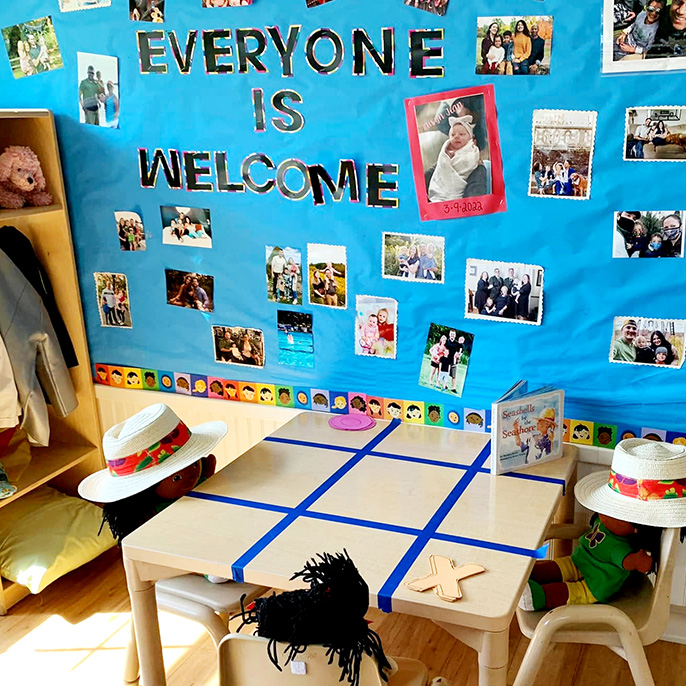
Young children are building their sense of self long before they can articulate it. When a toddler sees a photo of their own family posted on the classroom wall, or when a preschooler hears a teacher read the words they shared about a favorite tradition, something important happens—they feel seen. As teachers bring attention to these displays, children take notice of each other’s stories and begin building curiosity about others and cultural awareness. They learn that every family is unique and celebrates in different ways, and that difference is something to be curious about, not unsure of. Additionally, our Home-School Connections and center events aren’t just built for children—they’re a standing invitation for parents to build community and lean on their centers as a source of support.
A Year-Long Discovery of Identity, Community, and Belonging
Our Bravo! curriculum invites family participation unit by unit, building each child’s story into each theme:
- Unit 1 All About Me: Families send in photos and help build “Our Big Book of Families” and a classroom Family Board—sharing special people, routines, traditions, and favorite songs or books. For many children, it’s the first time they see their own family represented as part of the classroom story.
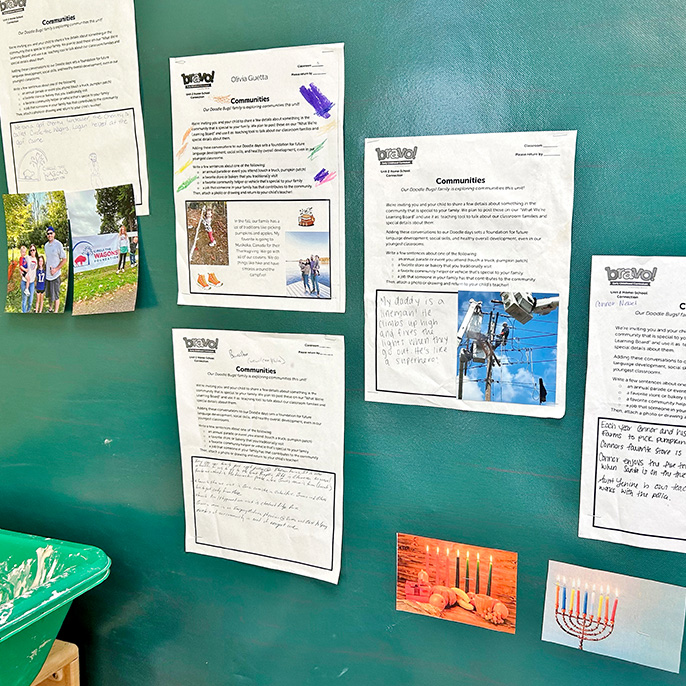
- Unit 2 Communities: Families share a favorite local tradition, helper, or job that connects their household to the wider world, feeding our “What We’re Learning Board” and giving teachers real material for classroom conversations about the people and places that matter to each child.
- Unit 3 Traditions & Celebrations: A Show & Tell built entirely around family holidays—favorite traditions, foods, games, and songs—turned into a keepsake that’s revisited and shared with the group.
- Unit 4 Amazing Animals: Children talk with their families about a pet or a memorable animal encounter, drawing and dictating what makes it special, and connecting early science learning to something personally meaningful.
- Unit 5 Adventures in Literacy & Music: Families reflect together on a favorite book or song and why it matters to them, reinforcing a love of reading and music that started at home.
- Unit 6 The Great Outdoors: Families share a favorite outdoor tradition—gardening, hiking, a walk around the block —connecting nature exploration back to real family life.
Each activity is simple by design: a short conversation, a drawing, a photo. But multiplied across every child in every classroom, they become a mosaic (literally displayed on our walls) of the many family structures, traditions, and cultures that make up a Doodle Bugs! community. And because several of these activities invite parents and grandparents in as guest readers or storytellers; the learning doesn’t stop with paper. It becomes a lived, in-person exchange between generations and cultures.
 Walk up to one of our “What We’re Learning” boards during the Communities unit and you’ll see exactly what this looks like in practice: one child’s family shares that dad is a lineman who “climbs up high and fixes the lights”—like a superhero (in his child’s words). Another writes about the day a new baby sister was born, and the aunts who work as nurses at the hospital where she arrived. A third shares an annual hayride and pumpkin-picking tradition, or a family’s gratitude for the community’s teachers, first responders, and librarians. None of it is curated or polished—it’s real, in a parent’s handwriting, next to a child’s drawing- and that’s exactly why it works.
Children don’t just learn that their own family matters; they learn, in very concrete terms, how many different ways a family and a community can look.
Events That Celebrate Every Family, All Year Long
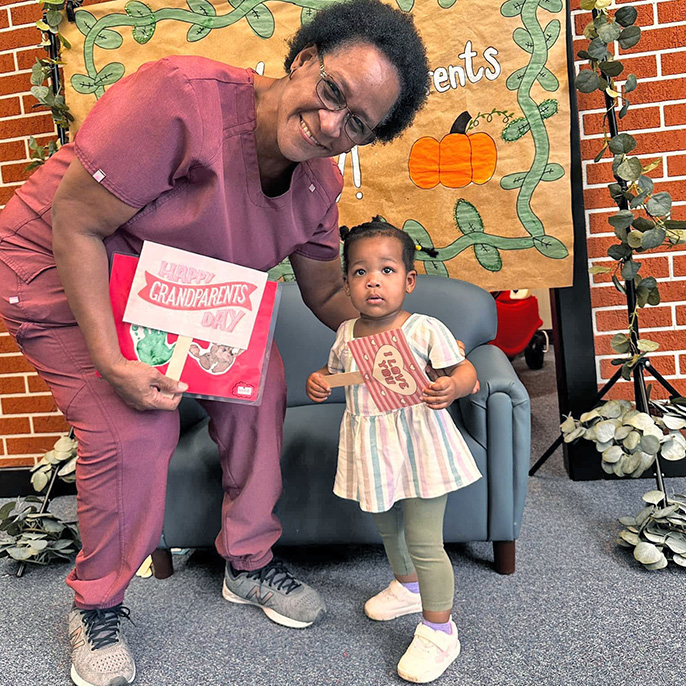
Our center calendar is built the same way. Alongside beloved traditions like our Halloween Parade, Turkey Trot, Holiday Sing-Along, and Musical Sharing Event, we intentionally make space for the full range of celebrations our families bring with them—Hanukkah, Kwanzaa, Chinese New Year, Diwali, St. Lucia Day, Cinco de Mayo—with read-alouds and center-level touches that help children encounter holidays beyond their own household. Black History Month and Women’s History Month bring curated, developmentally appropriate books into every classroom for a full month of exposure, not just a single lesson. And events like Grandparents’ Day, Muffins with Mom, and Donuts with Dad make sure every family member or every guardian has a moment to walk through our doors and be part of the day.
The Impact: What This Builds, Beyond the Bulletin Board
When we ask families to talk with their child about a favorite tradition, or send in a photo for the Family Board, we’re doing more than decorating. We’re:
- Boosting confidence and security – children see their own identity reflected and valued at school.
- Building language and communication skills – the “tell me about your drawing” conversations built into these activities are rich, natural opportunities for expressive language, especially for our youngest learners.
- Teaching empathy early – when a child hears a classmate’s family celebrates something different from their own, curiosity and acceptance start to take root before bias ever has a chance to.
- Strengthening the center community as a whole – parents who come in to read a book, share a job, or celebrate a holiday become part of the fabric of the classroom, not just drop-off and pick-up faces.
 An Invitation, Not Just an Assignment
None of this works without families leaning in and filling out a handout, sending in a photo, or saying yes to a guest-reader slot. This blog post is not only a celebration of what our Doodle Bugs! community has already built together, it’s also an invitation for when the next Home-School Connection or center event shows up in your child’s mailbox or in your daily report. Your presence in your child’s classroom is a precious moment in time that will help your child’s school become a little richer, a little more connected, and a lot more reflective of the wonderful diversity of the families who make up our Doodle Bugs! community.